Nant y Ffrwd Watercourse Flood Resilience Works
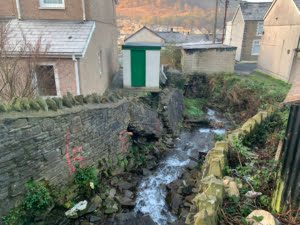
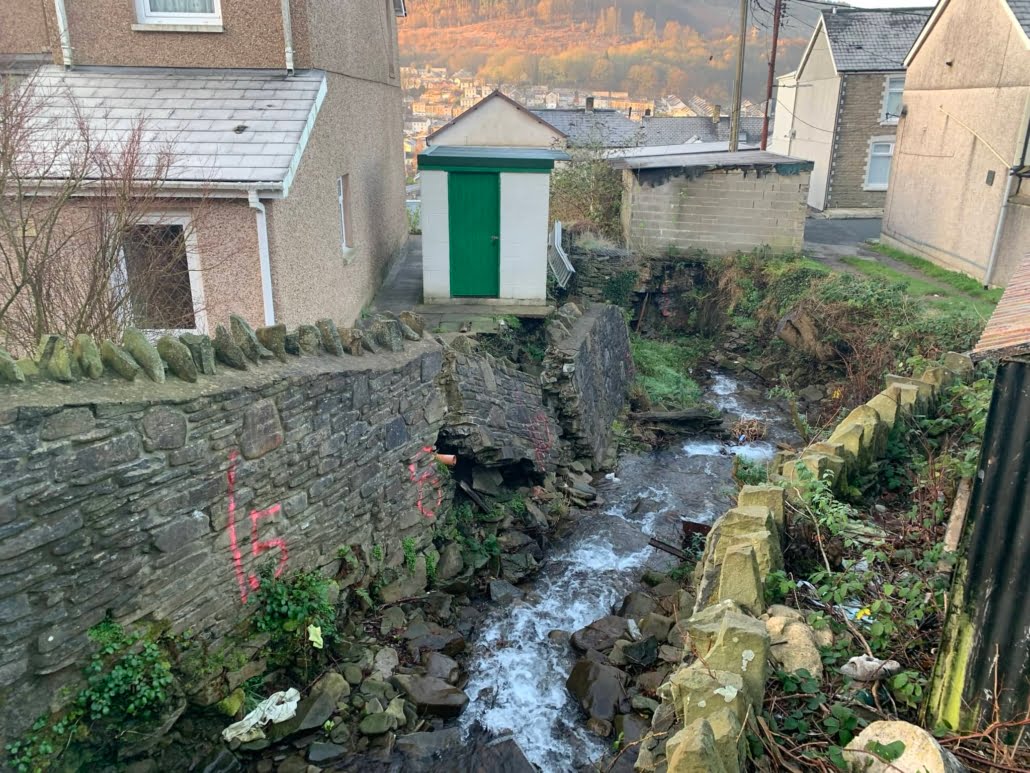
Early 2020, Storm Dennis caused extensive damage to the Nant y Ffrwd watercourse in Mountain Ash, South Wales. The waterway is a tributary of the Afon Cynon and flows through a series of culverted and open channel sections within a residential area.
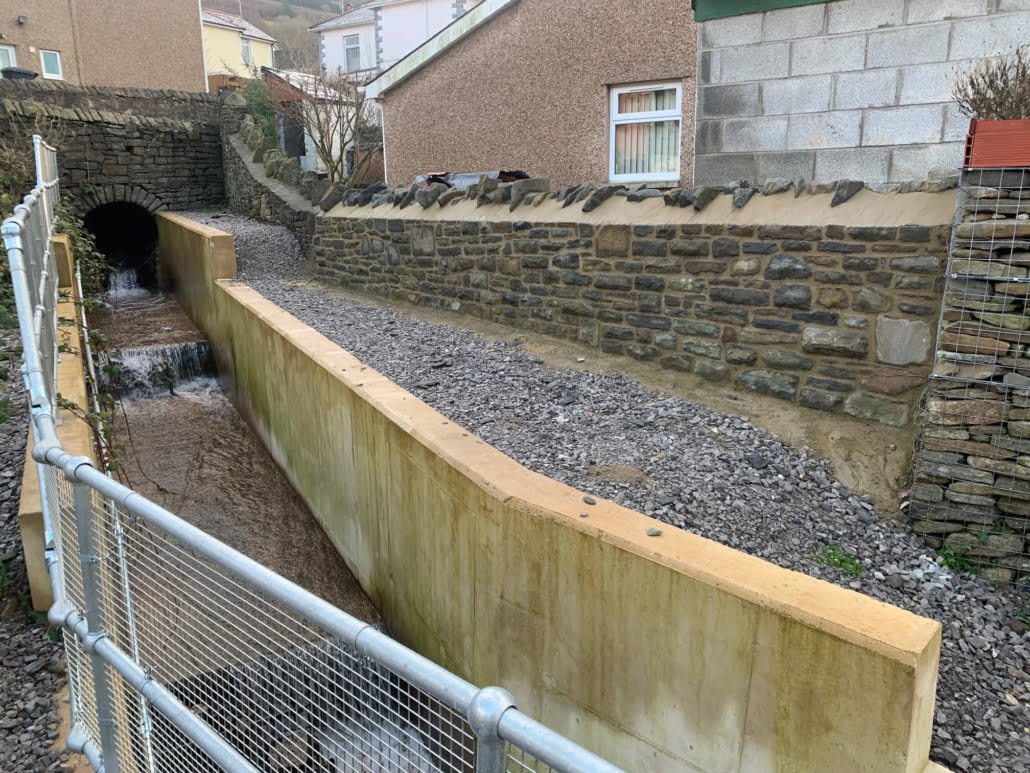
The open channel sections are bounded by stone masonry river walls and in some areas the channel has been lined with reinforced concrete to prevent erosion of the mobile riverbed material.
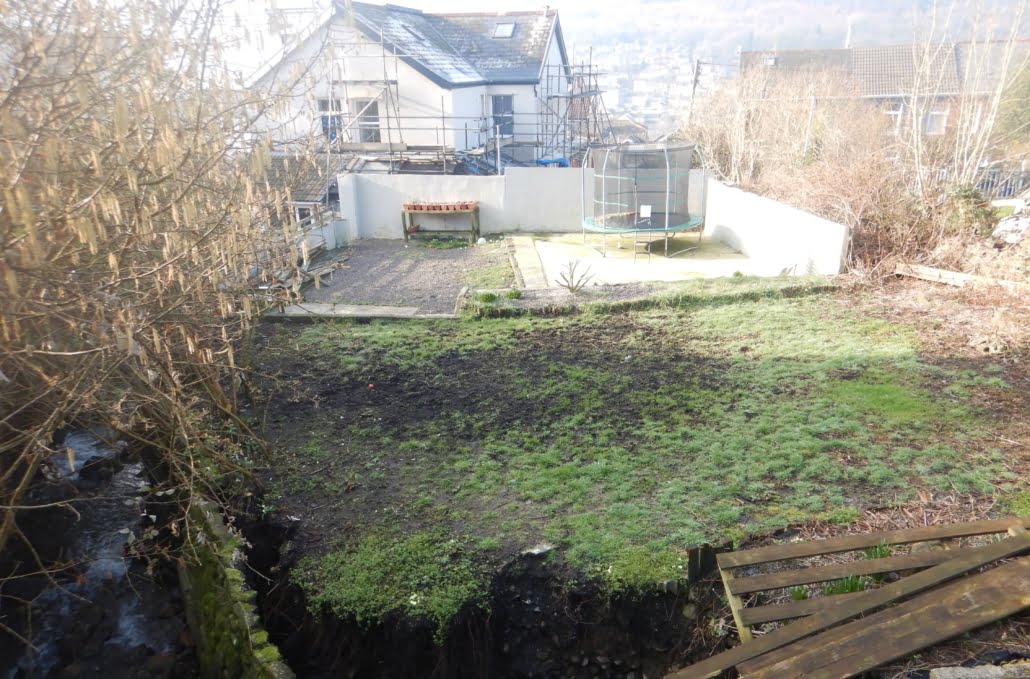
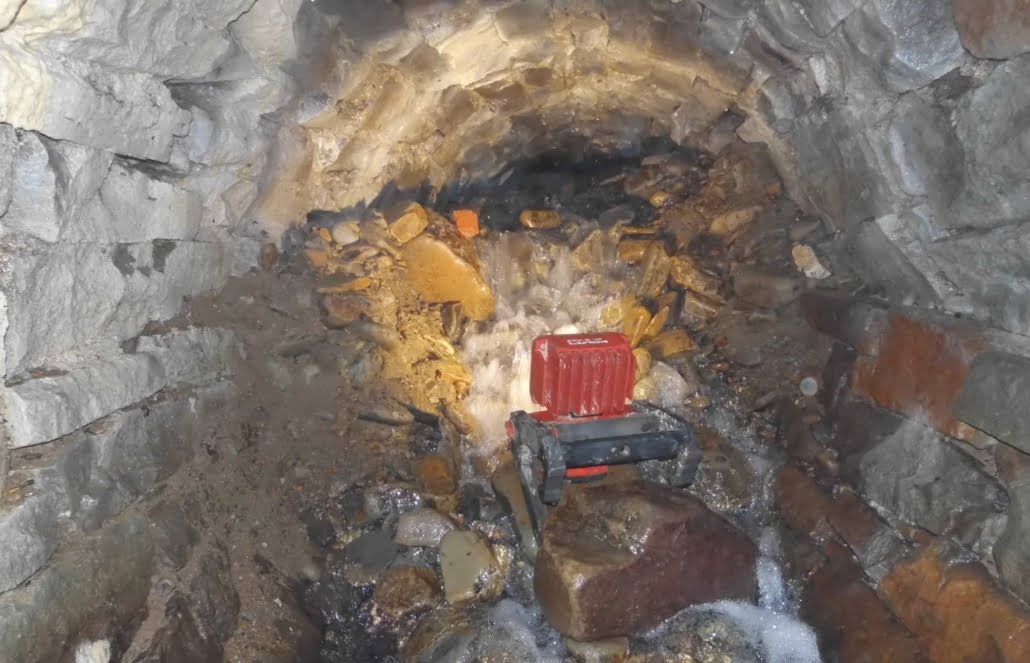
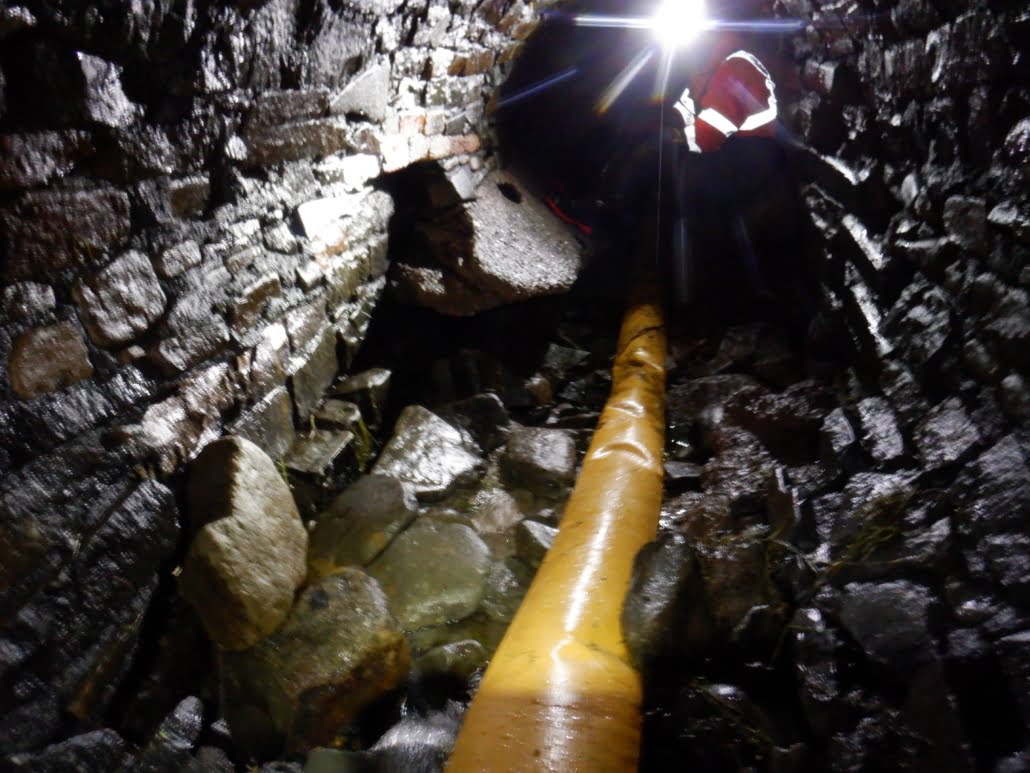
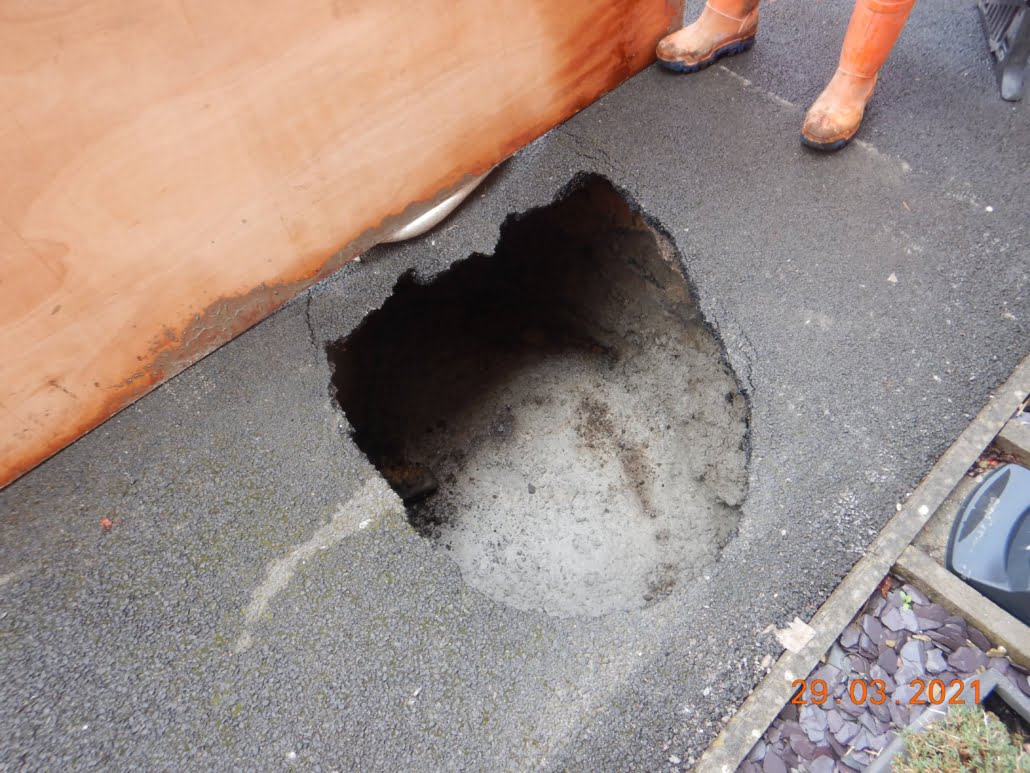
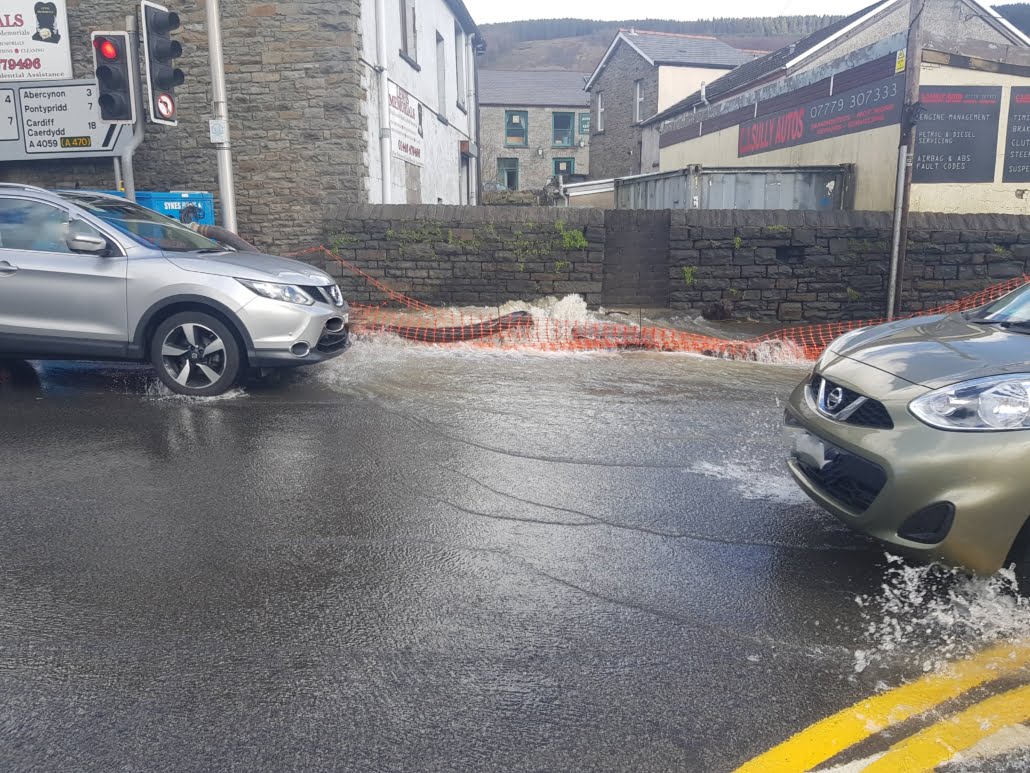
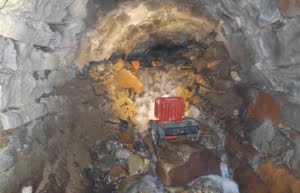
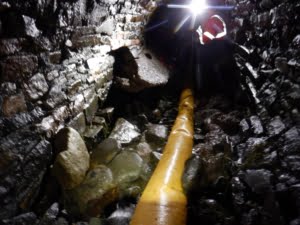
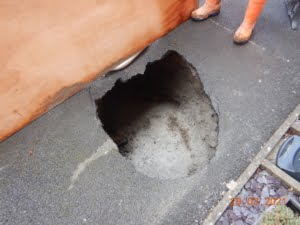
The engineered sections of this watercourse suffered damage with scour erosion resulting undermining and failure of sections of the river walls compromising the safety of the adjacent residential dwellings and highway. A sink hole developed along one culverted section within the driveway of a residential property due to localised loss of the culvert wall and flood debris resulted in blockage of the downstream culvert, which subsequently overtopped and flooded residential dwellings.
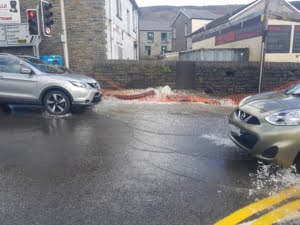
EDS were engaged by Rhondda Cynon Taf County Borough Council (RCTCBC) to provide reactive and planned design and construction services to provide engineering solutions to secure the long-term flood resilience of this watercourse.
Key Challenges:
The works required careful planning and management of the public interfaces working in multiple locations in a busy residential area on the side of steep valley. The works were sequenced to manage these impacts and required EDS to consult with residents, develop and implement appropriate traffic and pedestrian management measures to assure public safety, maintain access for school traffic and accommodate secure construction site compounds with adequate space for plant, equipment, materials and welfare.
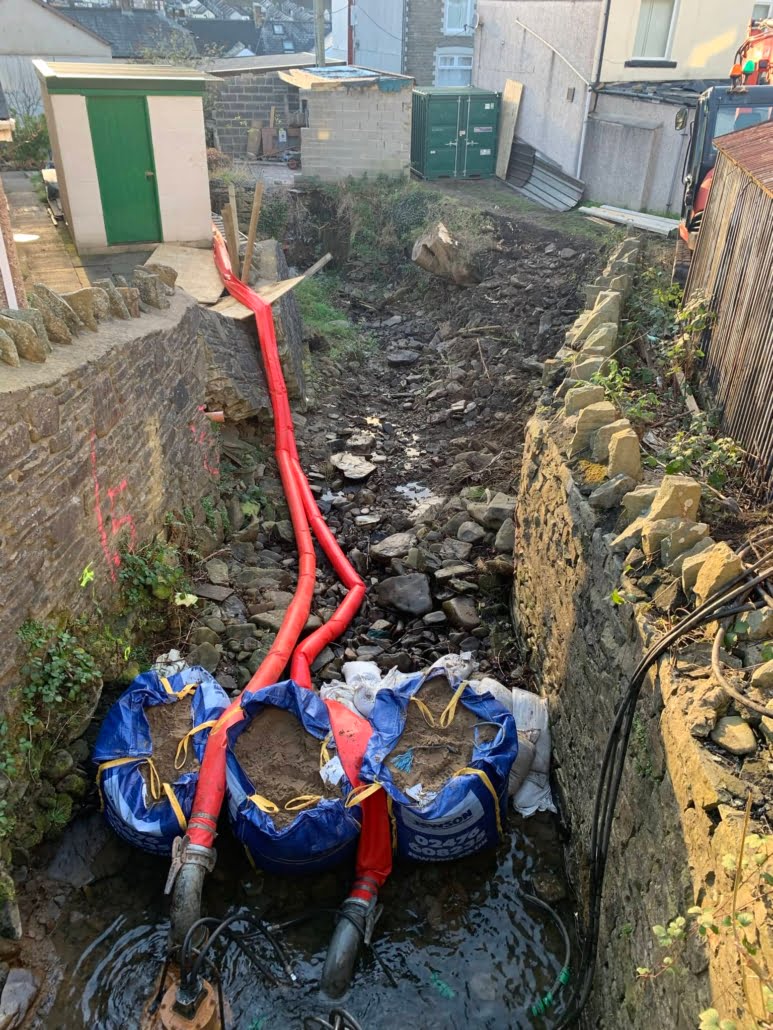
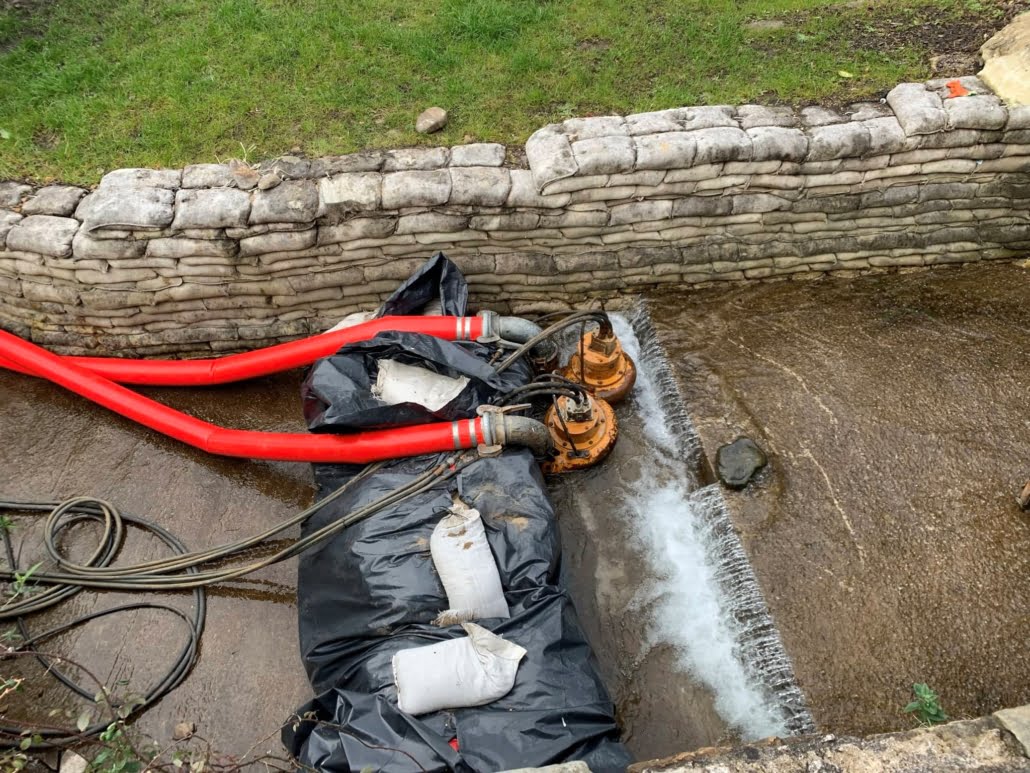
All works required online management of the existing flows within the watercourse through over pumping as the spatial constraints prevented offline diversion. The reactive element of the works to clear the culvert blockage, repair the culvert wall and underpin the highway had to be completed in the winter period; hence, works were susceptible to weather delays once the capacity of the installed pumps was exceeded due to the flashy nature of the watercourse. A duty and standby pumping arrangement was implemented to provide redundancy and risk management during concreting activities and for pollution management and control.
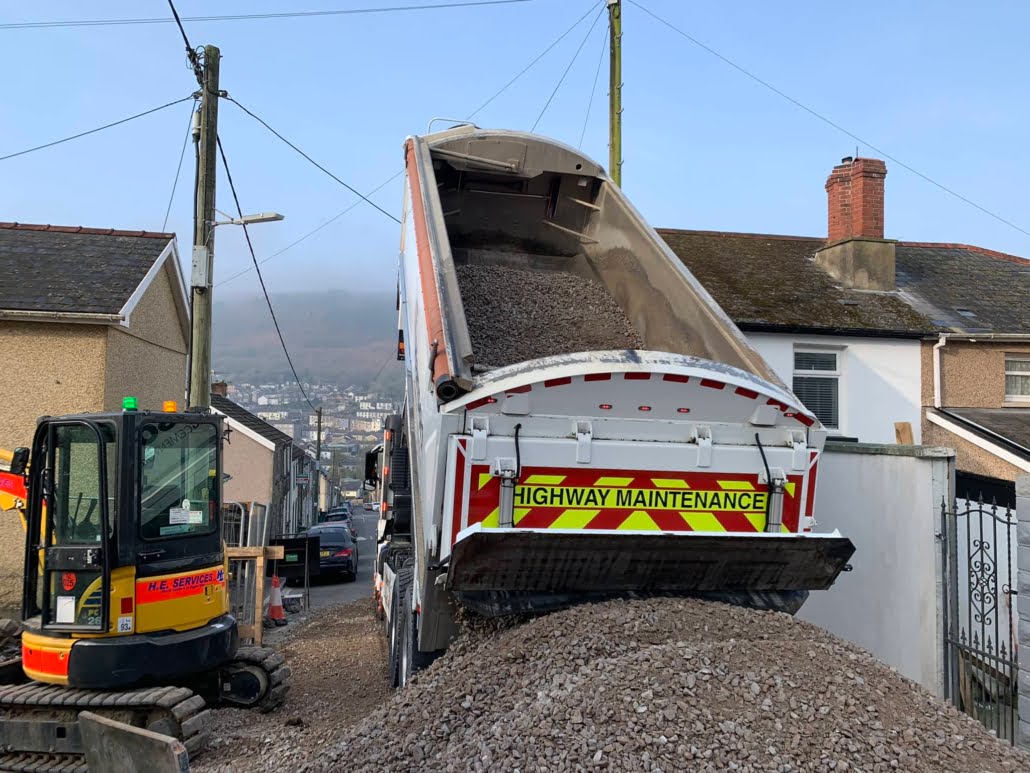
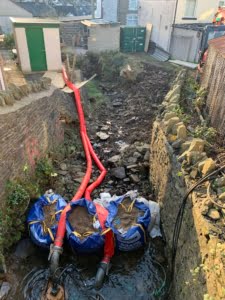
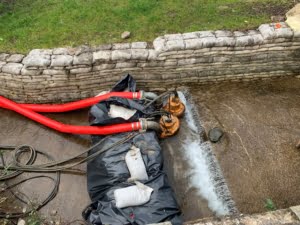
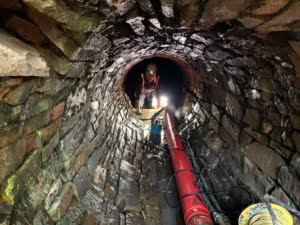
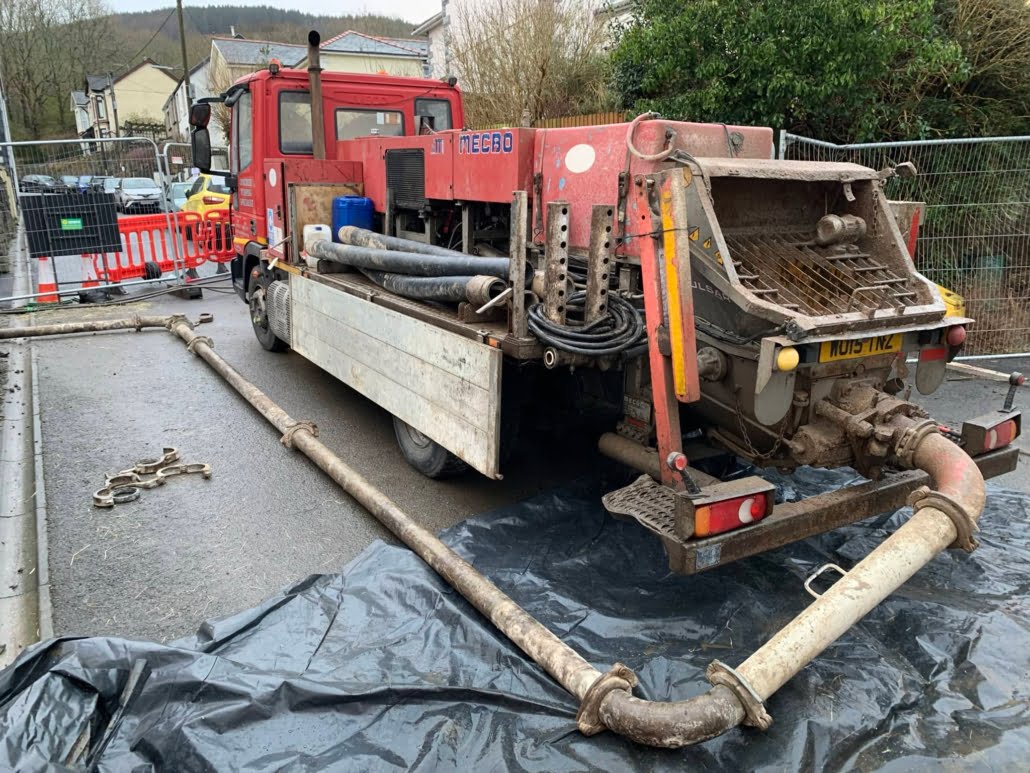
Concrete pours were planned for early mornings to avoid peak school hours and refuse collection times, with a combination of boom and static line pumps used to deliver concrete to the works location. An underwater concrete additive was used to accelerate the curing time and reduce the risk of washout, allowing pumps to be switched off within the agreed working hours due to noise restrictions and to control the pollution risks to the downstream watercourse.
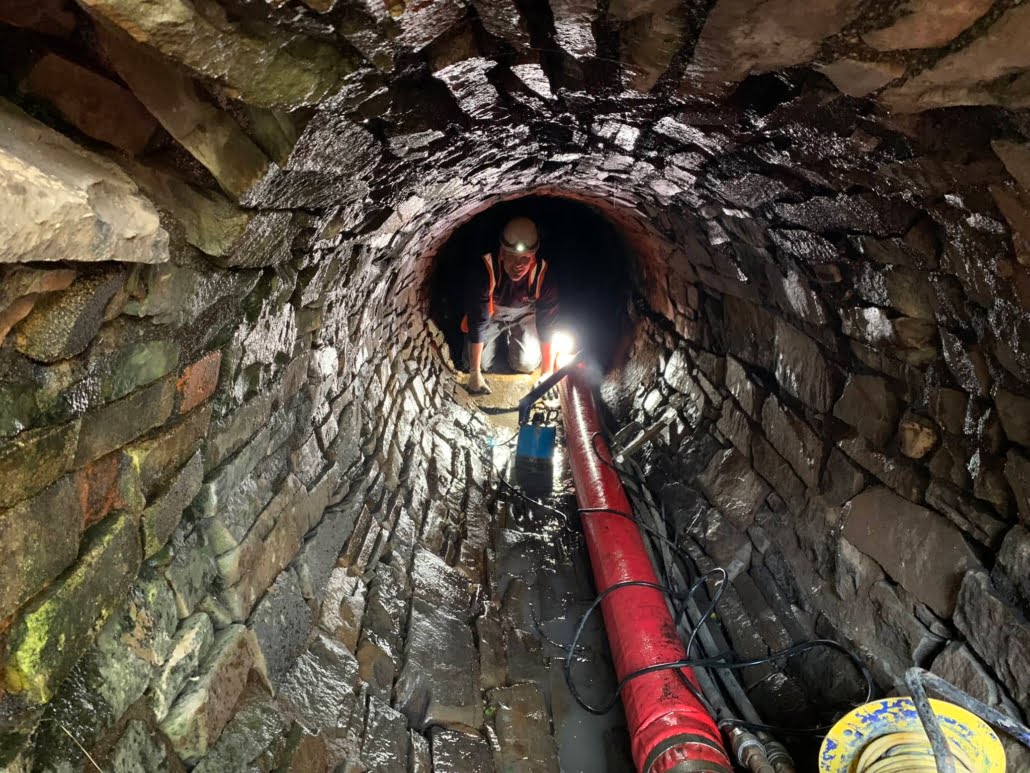
All works within the culverted sections to repair the sink hole, culvert wall and clear debris were completed by confined space trained and competent operatives in accordance with a detailed method statement and risk assessment and rescue plan with entry controlled by a permit system.
Solution and Added Value:
EDS collaborated with Pebble Engineering Ltd. to provide temporary and permanent works designs to each location. The most challenging location being a 40m section of watercourse adjacent to a residential property where the river wall had failed, resulting in undermining to the property and a garage.
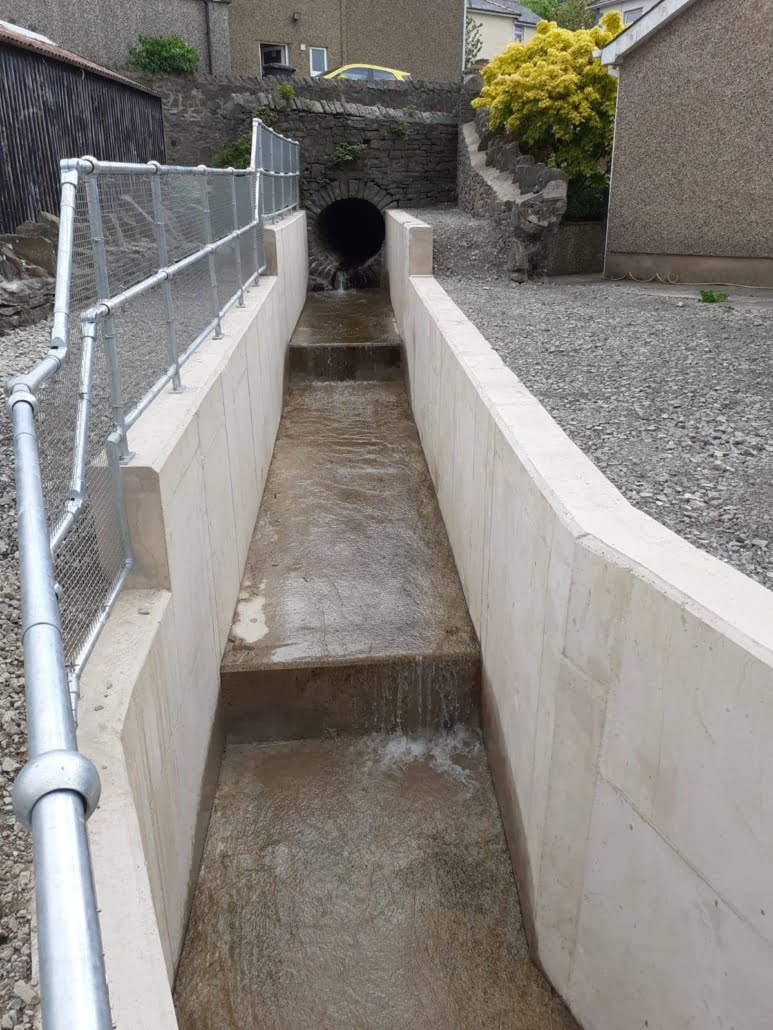
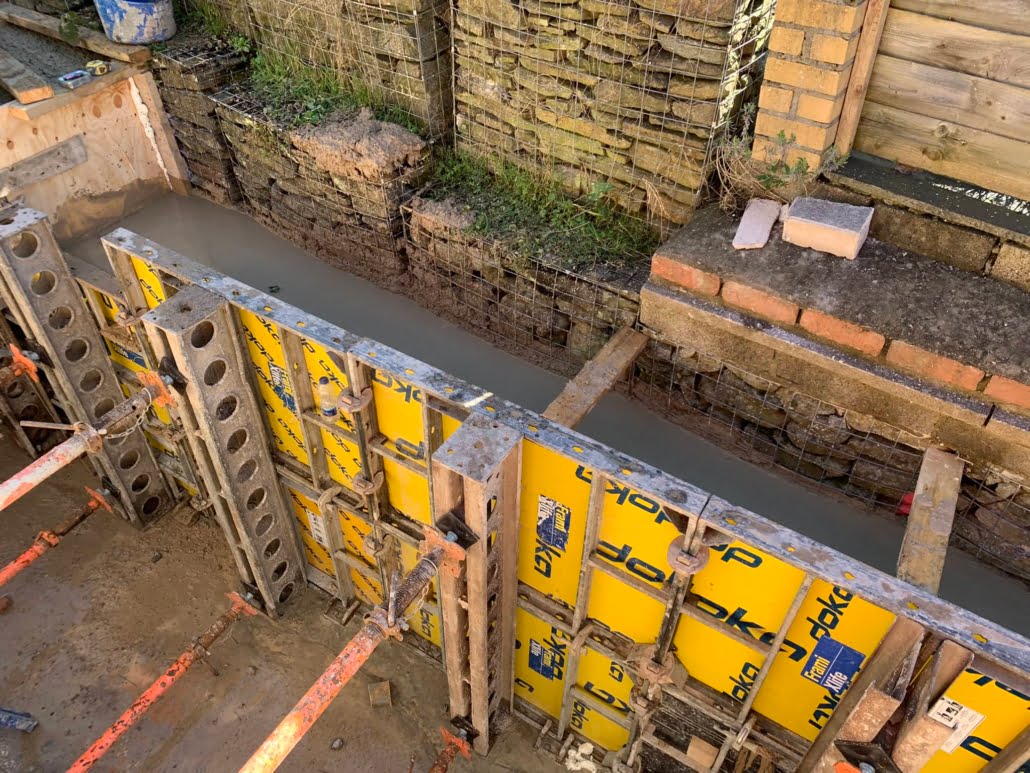
EDS produced an Options Appraisal report which tabled various options for short and long-term solutions for this location, which were evaluated against agreed assessment criteria including cost, constructability and environmental indicators. The preferred option involved relining the channel with a reinforced concrete ‘U’ shaped structure built within the confines of the existing channel. The hydraulic performance of the new structure was assessed and a number of steps incorporated in the detailed design to reduce flow velocities under the design flood.
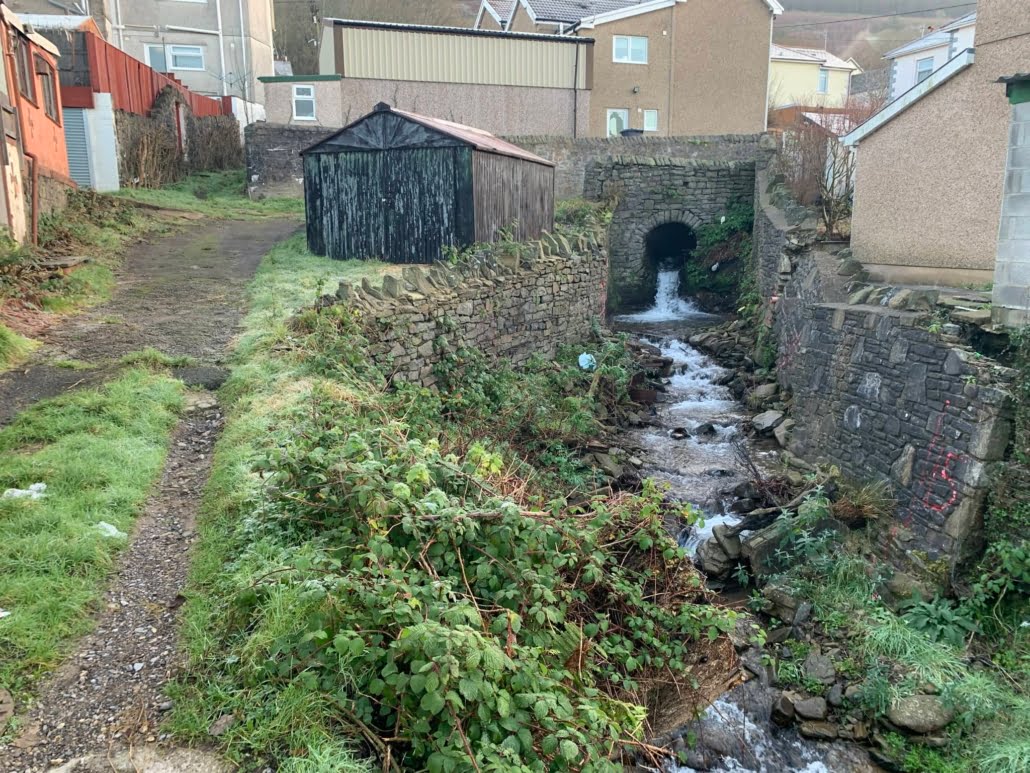
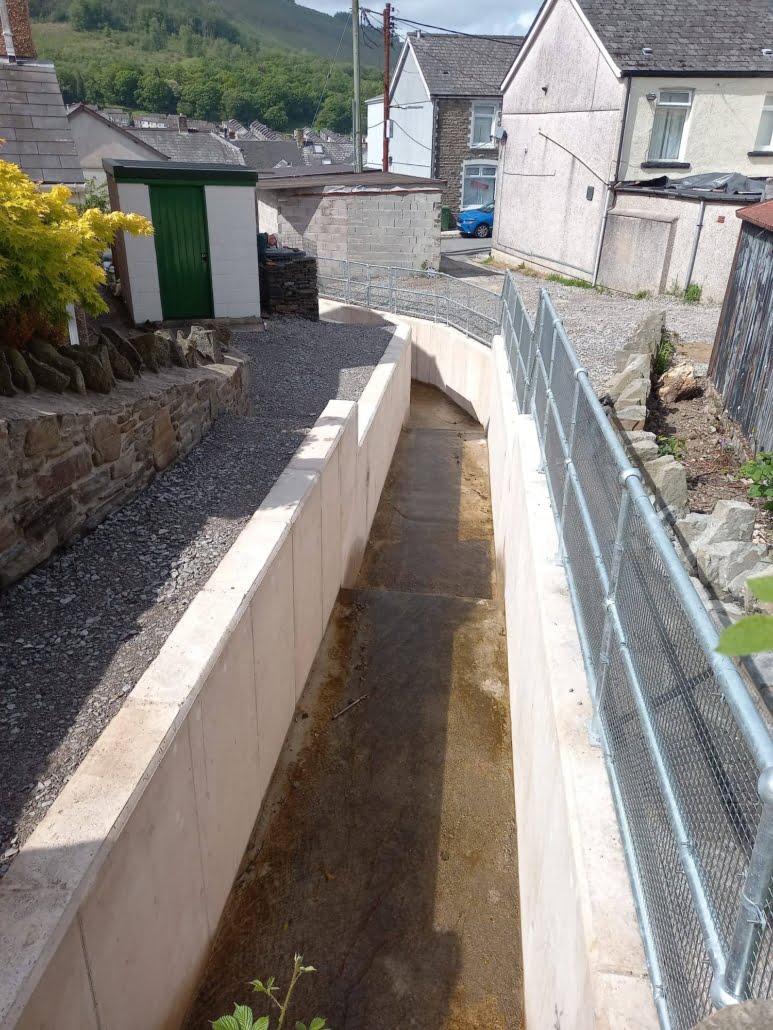
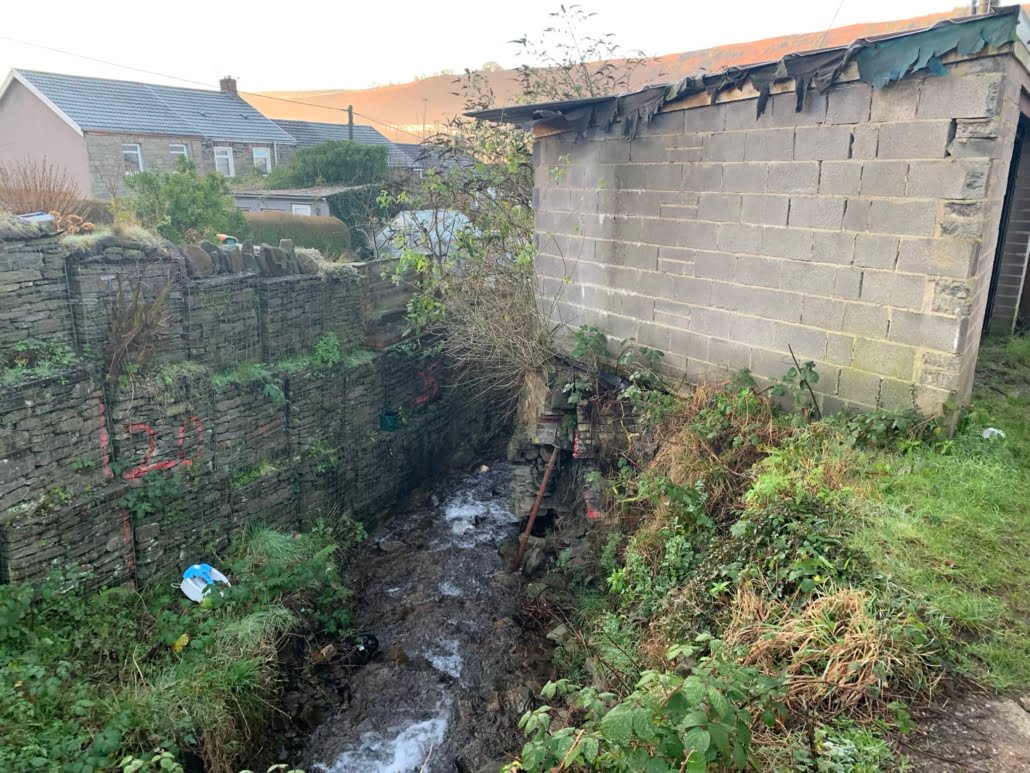
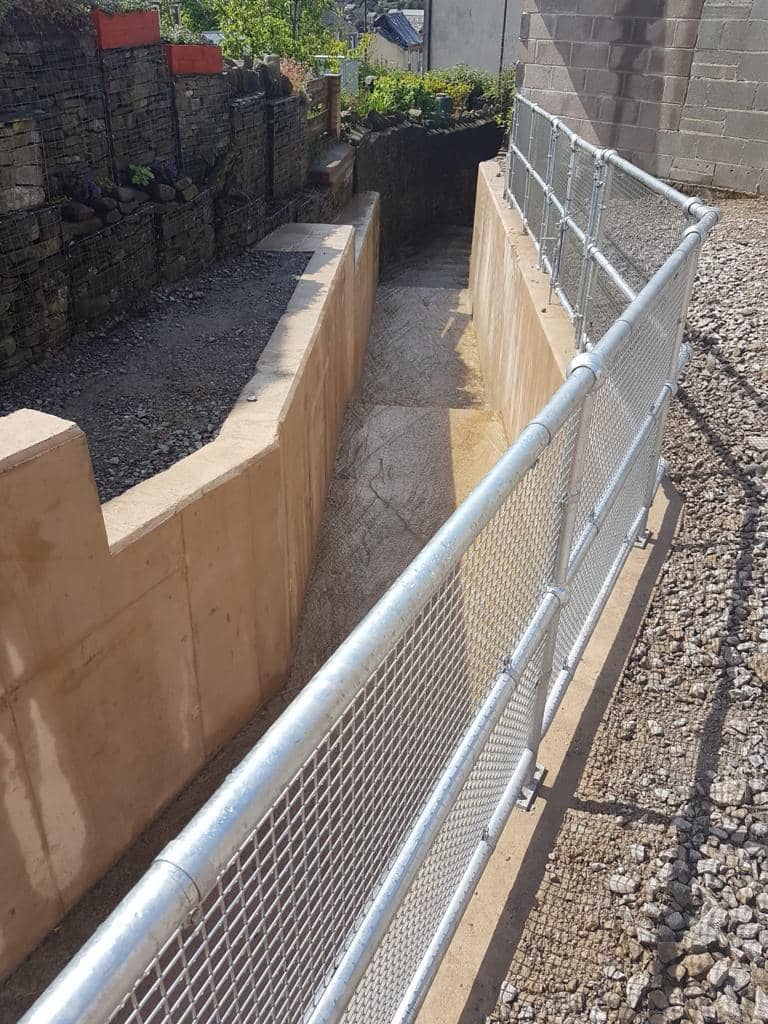
EDS provided a full-turnkey solution for this location drawing on in-house engineering and sub-consulted structural design services through Pebble Engineering. Construction works commenced in February 2022 and were completed in May 2022.
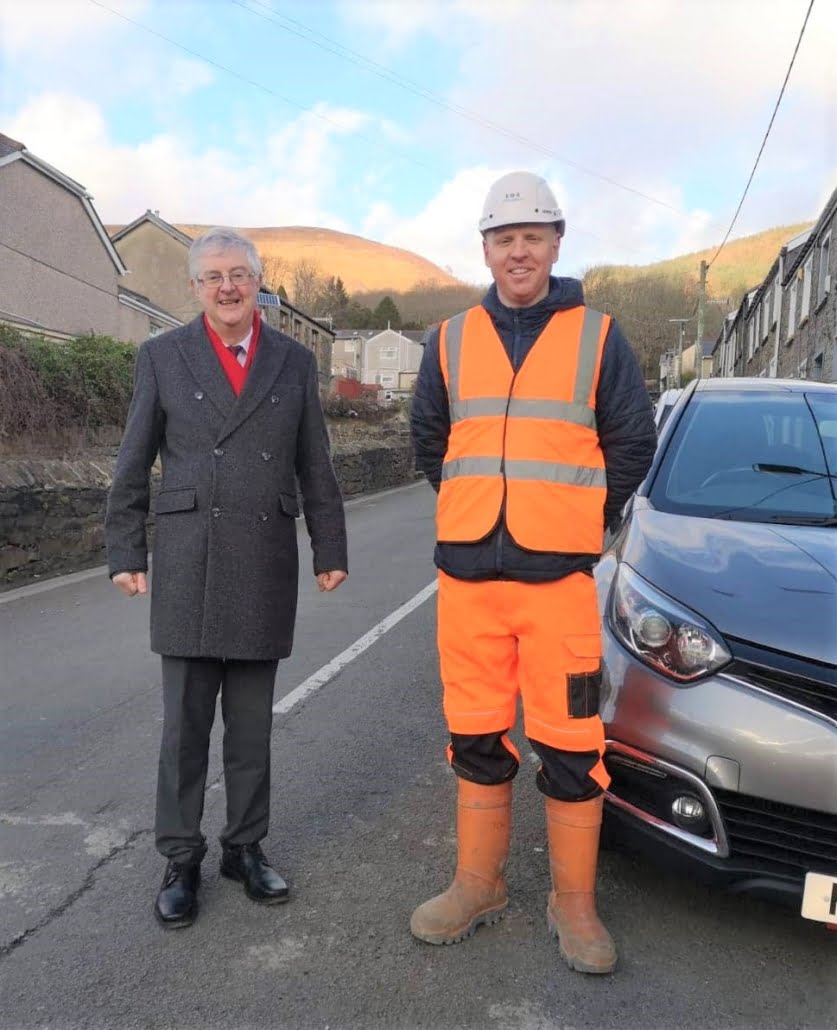
The works being part-funded by the Welsh Assembly Government (WAG) were visited by Wales’ First Minister, Mark Drakeford. EDS were praised for their work and for providing long-term flood resilience to this community
Nathan Walding our Principal Engineer visited the site in January 2023, and his photo confirms everything is looking good, and it’s a project EDS are still very proud to have been part of.